Would you like to switch to the accessible version of this site?

Go to accessible site Close modal window

Don't need the accessible version of this site?

Hide the accessibility button Close modal window
Accessibility View Close toolbar
Menu
  • Home
  • Laparoscopy
  • Services
    • Wellness
      • Puppy & Kitten Care
      • Vaccinations
      • Wellness Exam
    • Advanced Procedures
      • Cardiology
      • Endoscopy
      • Laparoscopy
      • Orthopedic
    • Surgery
      • Dental Care
      • Orthopedic
      • Soft Tissue Surgery
      • Spay & Neuter
    • Diagnostics
      • PennHip
      • Radiology
      • Ultrasound
    • Laser Therapy
    • Phovia
  • New Patient Center
    • What to Expect
    • Veterinary Resources
    • Payment Options
  • Iditarod
  • About Us
    • Meet our veterinary team
    • Our Team
    • What to Expect
    • Payment Options
    • Online Forms
    • Veterinary Topics
  • Contact Us
    • Prescription Refill Request
    • Online Pharmacy and Shopping
    • Appointment Request
  • Prescription Refill Request
  • Cardiology
  • PennHip
  • Home >
  • Articles >
  • Pet Health >
  • Pests and Parasites >
  • Tapeworms

Tapeworms

  • Created in Pet Health, Pests and Parasites

tapeworms

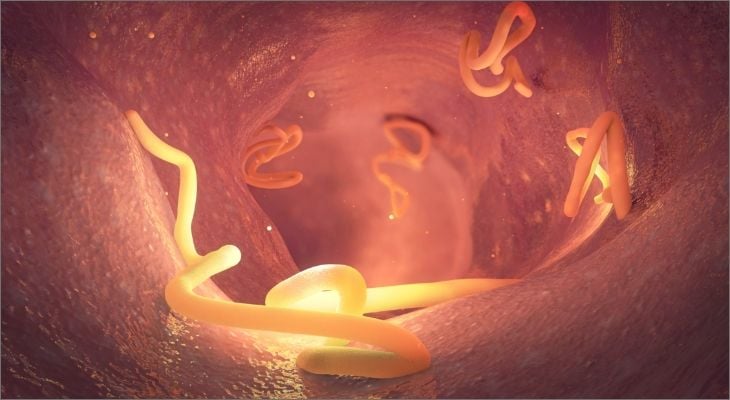
Tapeworms live in the digestive tracts of vertebrates as adults and often in the bodies of various animals as juveniles. In a tapeworm infection, adults absorb food predigested by the host, so the worms have no need for a digestive tract or a mouth. Large tapeworms are made almost entirely of reproductive structures with a small "head" for attachment. Symptoms vary widely, depending on the species causing the infection. The largest tapeworms can be 20 m or longer. Tapeworm awareness is importance to humans because they infect people and livestock. Two important tapeworms are the pork tapeworm and the beef tapeworm

Exclusive Offer